
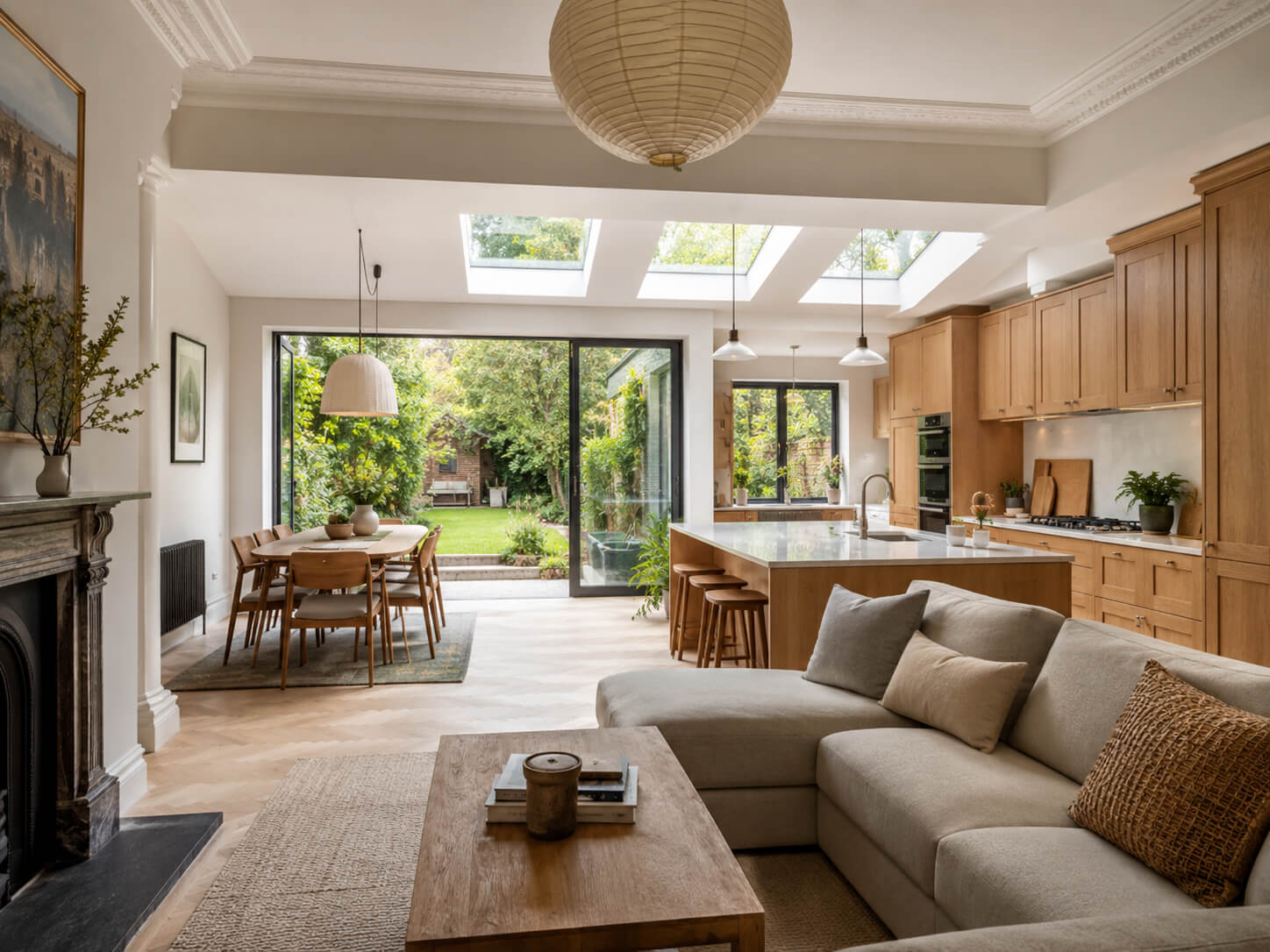
UK period homes have charm, detail, and history. They also need careful design. The right home interior design ideas can help you keep original features while making your home warmer, brighter, and easier to live in. This 2026 guide is written for homeowners planning home renovations, house extensions, loft conversions, garage conversions, or a full redesign across Glasgow, Edinburgh, East Kilbride, Newton Mearns, Bearsden, Milngavie, Clarkston, Giffnock, and surrounding areas.
Allison Architects is a Glasgow-based architectural practice specialising in domestic architecture, heritage refurbishments, extensions, and listed townhouse conversions. Its approach connects interior ideas with planning, structure, building regulations, and long-term usability.
Why Period Homes Need a More Thoughtful Design Plan
A period home is not a blank box. It may have cornicing, fireplaces, high ceilings, bay windows, timber floors, thick walls, and decorative plasterwork.
These features suit classic interior design, but modern family life often needs better storage, warmer rooms, improved insulation, and open-plan living. That is why interior design and styling should start with space planning, not just colour charts.
Before choosing finishes, think about:
- How each room is used daily.
- Where natural light enters.
- Which original features should stay.
- Whether structural changes are needed.
- How heating, ventilation, and storage will work.
- Whether planning permission or a building warrant may apply.
Good residential architecture connects home decor with function, structure, and long-term value.
Home Interior Design Ideas That Work Beautifully in Period Homes
The best home interior design ideas for period homes do not fight the building. They work with it.
For example, a Victorian sitting room may look best with restored flooring, soft wall colours, layered lighting, and fitted alcove storage. A Georgian hallway may suit natural stone, warm paint, and slim joinery that looks built into the house.
Many homeowners are now moving towards warm neutral interior design ideas, natural materials, and texture-led rooms. This shift feels especially right in older homes because it adds comfort without hiding original detail.
Practical ideas include:
- Restore fireplaces, cornicing, and timber floors where possible.
- Use warm whites, taupe, clay, olive, and mushroom tones.
- Add bespoke storage under stairs, in alcoves, or along awkward walls.
- Choose natural materials such as oak, wool, stone, linen, cork, and lime plaster.
- Use wall lights, picture lights, and lamps instead of relying on one ceiling pendant.
- Plan furniture around movement, views, and family routines.
These timeless home interior ideas help period properties feel calm, useful, and full of character.
The 2026 Look: Warm, Natural, and Quietly Modern
UK home interior trends 2026 are moving away from cold grey spaces and overly polished rooms. Homeowners want softer colour, better texture, and more personal interiors.
For period homes, this means modern classic home interiors rather than harsh contrast. Think heritage details paired with clean joinery, simple lighting, and modern home design touches.
Popular directions include:
- Natural materials interior design.
- Cosy home decor with layered fabrics.
- Texture-led interior design using plaster, timber, wool, and stone.
- Material drenching interiors in bathrooms, utility rooms, and kitchens.
- Warm colour palettes for relaxed family spaces.
- New home interiors that feel lived-in rather than showroom-perfect.
This creates home aesthetics that are stylish, but not trendy for the sake of it.
Best Living Room Colours and Wall Ideas for Period Properties
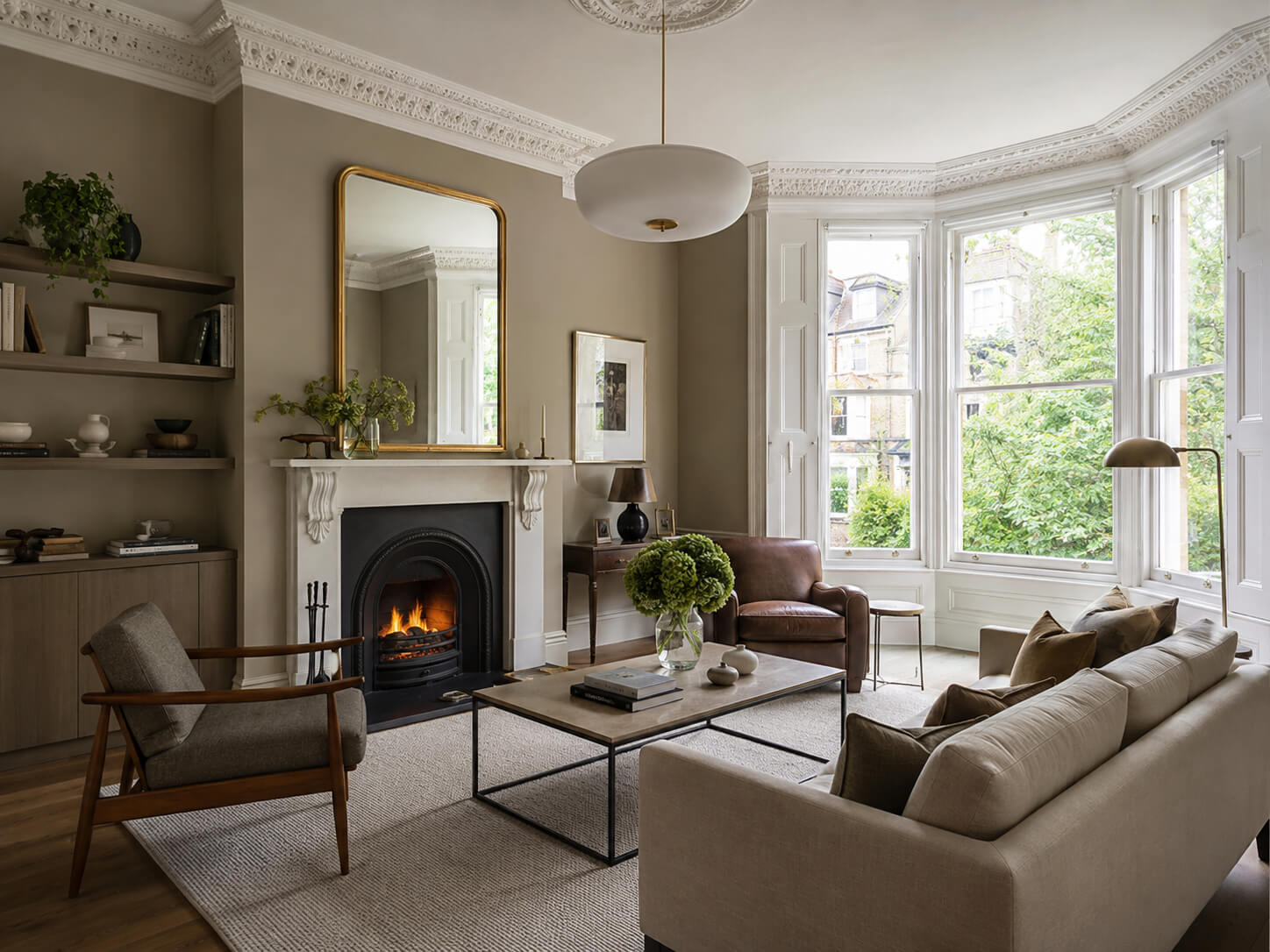
Sitting rooms are often the heart of period homes. For sitting room designs UK homeowners love, start with the strongest feature. It might be a fireplace, bay window, ceiling rose, or garden view.
The best living room colours for 2026 include warm white, stone, clay, olive, ochre, taupe, soft brown, and muted burgundy. These shades feel cosy without making the room heavy.
For design ideas for living room walls, try:
- Picture rails with framed artwork.
- Limewash or soft matt paint.
- Half-height wall panelling.
- Built-in shelving around a chimney breast.
- A large mirror above a fireplace.
- Simple wall decor for living room spaces that keeps the room balanced.
Modern cosy living room ideas work best when comfort and proportion come first. Avoid oversized furniture that blocks bay windows or makes circulation difficult.
Open Plan Lounge and Kitchen Ideas That Still Respect Character
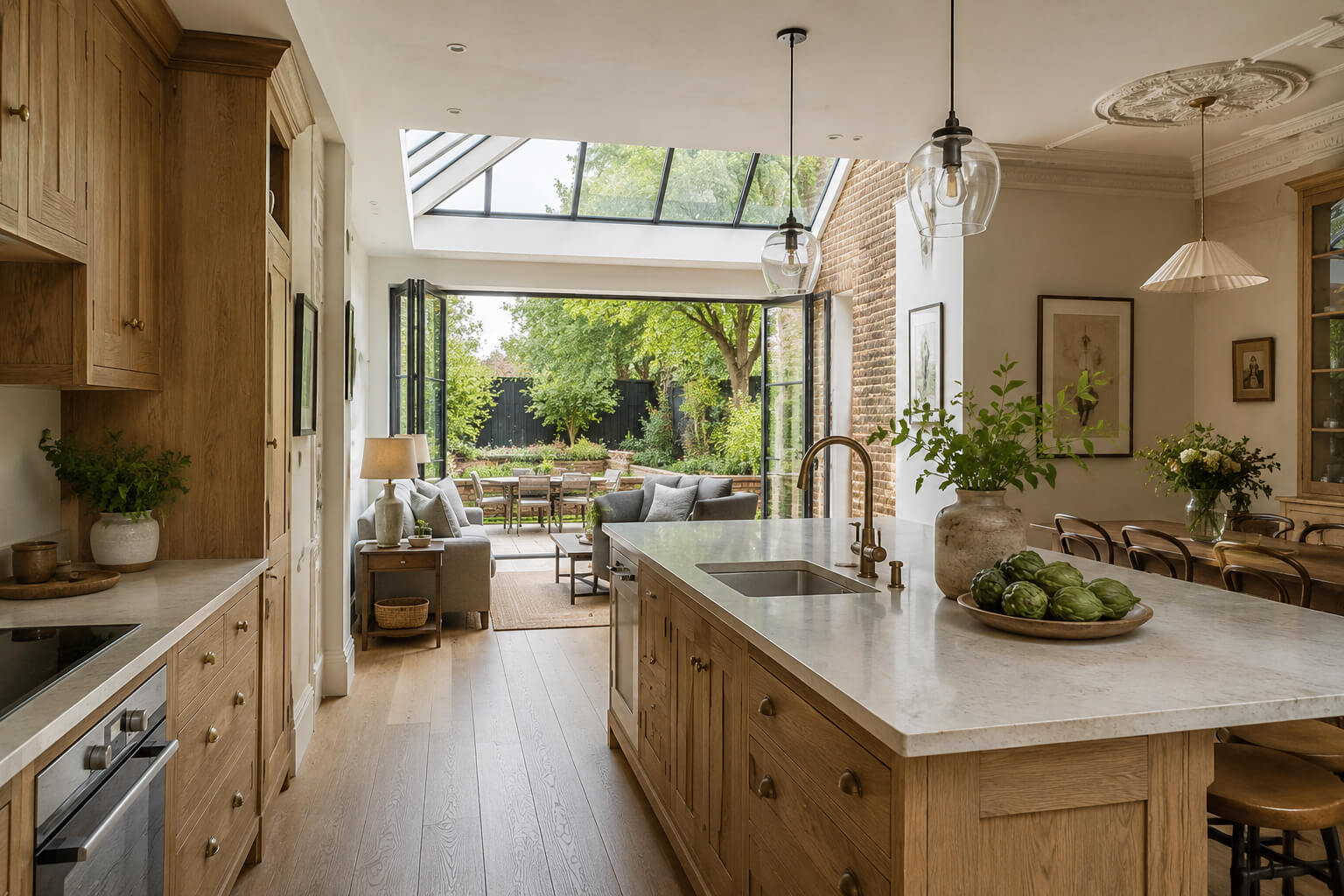
An open plan lounge and kitchen can transform a period home. It can improve light, family connection, and garden access.
This is often achieved through rear extensions, side extensions, or wraparound extensions. But the new space should not feel like a modern box attached to an old house.
Strong kitchen and home design should include:
- Clear cooking, dining, and sitting zones.
- Rooflights or large glazed doors for natural light.
- Warm flooring that links old and new areas.
- A dining area decor scheme that feels relaxed, not formal.
- Enough storage to keep daily clutter hidden.
- Structural planning for walls, beams, drainage, and ventilation.
This is where architect-led interior design services can add real value. The layout, light, structure, and finishes are planned together from the start.
Hallways, Dining Rooms, and Small Spaces Still Matter
Hallways shape the first impression of a home. For decor for hall areas, choose durable flooring, good lighting, and simple storage for coats, shoes, and bags.
Dining spaces can also work harder. A bay-window dining area, built-in bench, or slim cabinet can improve both function and atmosphere.
Instead of forcing exact trends, focus on natural decor for interiors that fit the home’s age, scale, and light. Even small spaces can feel special with the right joinery, colour, and lighting.
Planning, Building Regulations, and Project Feasibility
Interior ideas become stronger when they are checked against real project limits.
In Scotland, mygov. scot and Scottish Government guidance explain that some smaller household projects may fall under permitted development rights if they meet specific rules. Larger extensions, homes in conservation areas, listed buildings, and major external changes may need a planning application.
Building regulations are also important. The Scottish Government’s domestic technical handbook for April 2026 applies to building warrants submitted on or after 6 April 2026, and to building work not requiring a warrant that starts from that date.
Before starting a project, check:
- Planning permission needs.
- Permitted development rights.
- Building warrant requirements.
- Structural wall removals.
- Fire safety and escape routes.
- Insulation, ventilation, and heating.
- Drainage and construction planning.
- Budget and timeline risks.
Planning to renovate or redesign a period home in Glasgow or Central Scotland? Allison Architects can help assess feasibility, layout, planning, building warrant requirements, and design options before work begins.
How Architectural Design Adds Value Beyond Decor
Interior decoration can change how a room looks. Architecture changes how a home works. For homeowners considering full home interior design services, the biggest value often comes from early design decisions. These include room layout, light, storage, structure, circulation, and energy performance.
Architectural drawings help test ideas before construction. They also support planning applications, building warrant submissions, and clearer pricing from contractors.
This can improve:
- Daily comfort.
- Energy efficiency.
- Natural light.
- Storage.
- Accessibility.
- Property value improvement.
- Long-term usability.
- Design quality.
An interior design consultant or interior decorator consultation may help with finishes. But for house extensions, loft conversions, garage conversions, home renovations, and major layout changes, architectural input should usually come first.
Local Design Advice for Glasgow and Central Scotland Homes
Period homes across Glasgow, Edinburgh, Bearsden, Milngavie, Clarkston, Giffnock, Newton Mearns, and East Kilbride each have different design challenges. Some homes need better light. Others need more family space, improved insulation, or a smarter kitchen layout. Older properties may also need careful planning around heritage features, conservation area rules, or listed building consent.
Local interior designers can support styling choices, but residential architecture gives the project a stronger technical base. Allison Architects combines local planning knowledge with a practical design process to help homeowners make clear, confident decisions. For commercial spaces, Allison Architects also shares practical workplace design advice in its guide to modern office interior design ideas.
Frequently Asked Questions
What are the best interior ideas for UK period homes in 2026?
The best ideas include warm neutral colours, natural materials, layered lighting, built-in storage, restored original features, and layouts that suit modern family life.
Do I need planning permission to redesign a period home?
Internal decoration may not need planning permission. Extensions, loft conversions, garage conversions, listed buildings, conservation areas, and external changes may need planning approval or a building warrant.
What colours work best in period homes?
Warm white, taupe, clay, olive, mushroom, ochre, soft brown, and muted burgundy work well. These colours suit period details and help rooms feel calm and cosy.
Is open-plan living suitable for older homes?
Yes, but it needs careful planning. Structure, light, heating, ventilation, storage, and room zoning should be considered before removing walls.
Should I use an architect or interior designer first?
For styling only, an interior designer may be enough. For extensions, planning applications, structural changes, loft conversions, or full renovations, speak to an architect first.
How can architectural design improve property value?
Good architectural design can improve layout, light, energy performance, storage, kerb appeal, and long-term usability. These changes can support stronger property value and better everyday living.
Conclusion: Make Your Period Home Work Beautifully for Modern Life
The best period home design does not erase character. It protects it, improves it, and makes it easier to enjoy every day. With careful space planning, warm materials, practical storage, and the right architectural guidance, homeowners can create interiors that feel timeless, comfortable, and ready for 2026.
For period home renovations, extensions, conversions, or planning advice in Glasgow and Central Scotland, Allison Architects can guide the early decisions that shape a better project.